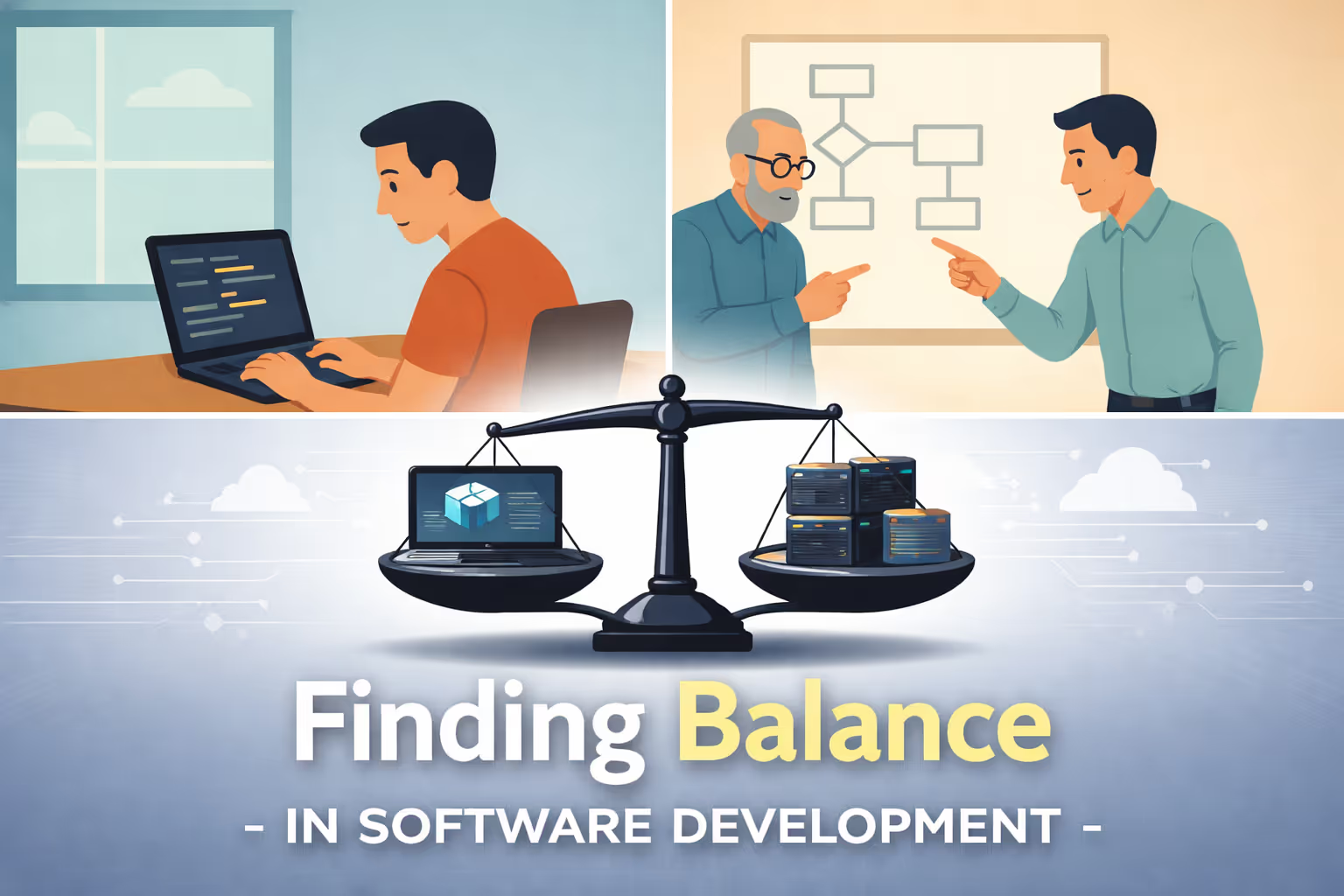
When I look back on my career, I see a cycle, a journey that started in simplicity, wandered through layers of complexity, and has now settled on the realization that balance is the real key in software development.
Early Days: Learning Without Mentors
Two decades ago, I started my career as a lone developer in a small company. There were no mentors, no seniors to guide me. We had an idea for a product, and with the startup spirit, we rushed into building it. I researched the technologies on my own and pieced together solutions. We built fast, kept it simple, and surprisingly, it worked. The product found customers, generated business, and supported us for over a decade. Looking back, those early products were far from perfect, but they were lean, economical, and effective.
New Exposure: Guidance and Complexity
Later, I moved to another company where, for the first time, I worked alongside senior architects and mentors. This exposure was invaluable. I learned modern patterns, frameworks, and the latest technologies. Every new feature seemed to demand a specialized service or a cutting-edge tool. We built robust systems with the best practices we knew at the time.
But reality struck during deployment. The overuse of microservices, dependencies, and infrastructure ballooned into something heavy. The costs went up, the footprint grew, and managing the system became a challenge. In pursuit of building the “perfect” product, we had over-engineered it.
The Realization: Finding Balance
This contrast made me reflect on my journey. In the beginning, I built products with simplicity and resource constraints in mind. Later, I overcompensated with too much technology. Now, I understand that software development is not about chasing minimalism or maximalism. It’s about balance.
Every feature, every service, and every dependency has a cost. Beyond functionality, we must evaluate deployment cost, scalability, maintainability, and manageability. Over-engineering can be just as harmful as under-engineering.
Closing Thought
Software development is a cycle of learning, unlearning, and relearning. For me, the lesson is clear: build with purpose, not with excess. Balance simplicity with scalability, and technology with pragmatism. That’s how we create products that are not only functional, but sustainable.